
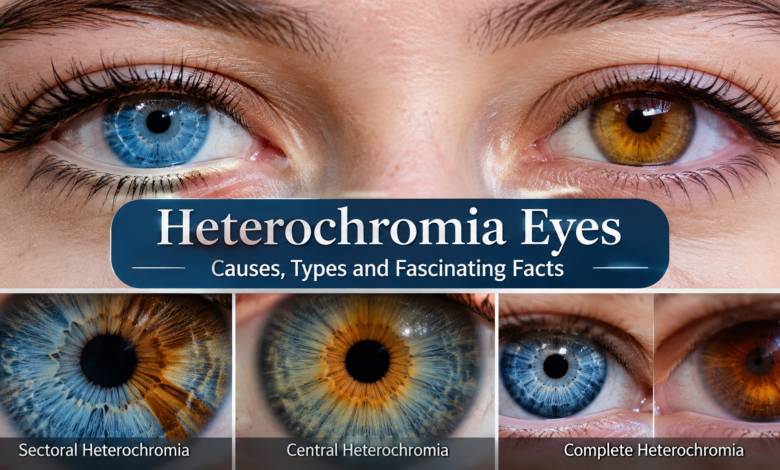
Heterochromia eyes are a rare and fascinating natural feature in which a person’s eyes have different colours or contain multiple shades within the same iris. Some people are born with one blue eye and one brown eye, while others have a mixture of green, amber or brown in a single eye.
Although this unusual appearance often attracts attention, heterochromia is not necessarily a medical problem. In many cases, it is simply a harmless genetic variation. However, certain eye conditions, injuries and medications can also cause differences in iris colour.
Understanding the different types of heterochromia eyes, why they occur and when they require medical attention can help separate interesting natural variations from potential health concerns.
This guide explores the three main types of heterochromia, their causes, the science behind eye pigmentation and some fascinating facts about this distinctive feature.
What Are Heterochromia Eyes?
Heterochromia is a condition in which a person’s irises have different colours. It can affect both eyes or appear as multiple colours within a single iris.
The iris is the coloured part of the eye surrounding the pupil. Its appearance depends largely on melanin, a natural pigment that also contributes to the colour of human skin and hair.
People with heterochromia may have:
-
One blue eye and one brown eye.
-
One green eye and one hazel eye.
-
A brown section within a blue or green iris.
-
Different coloured rings surrounding the pupils.
The condition can be present from birth or develop later in life. Medical professionals generally distinguish between congenital heterochromia, which is present at birth or develops early, and acquired heterochromia, which appears following an injury, illness or another change.
According to the American Academy of Ophthalmology (AAO), heterochromia has several distinct patterns, including complete, partial and central heterochromia.
More Read [August Birth Flower: Meaning, Symbolism and Beautiful Facts]
Three Main Types of Heterochromia Eyes
Heterochromia is generally divided into three main visual categories. Each type has a different appearance depending on how colour is distributed throughout the irises.
1. Complete Heterochromia
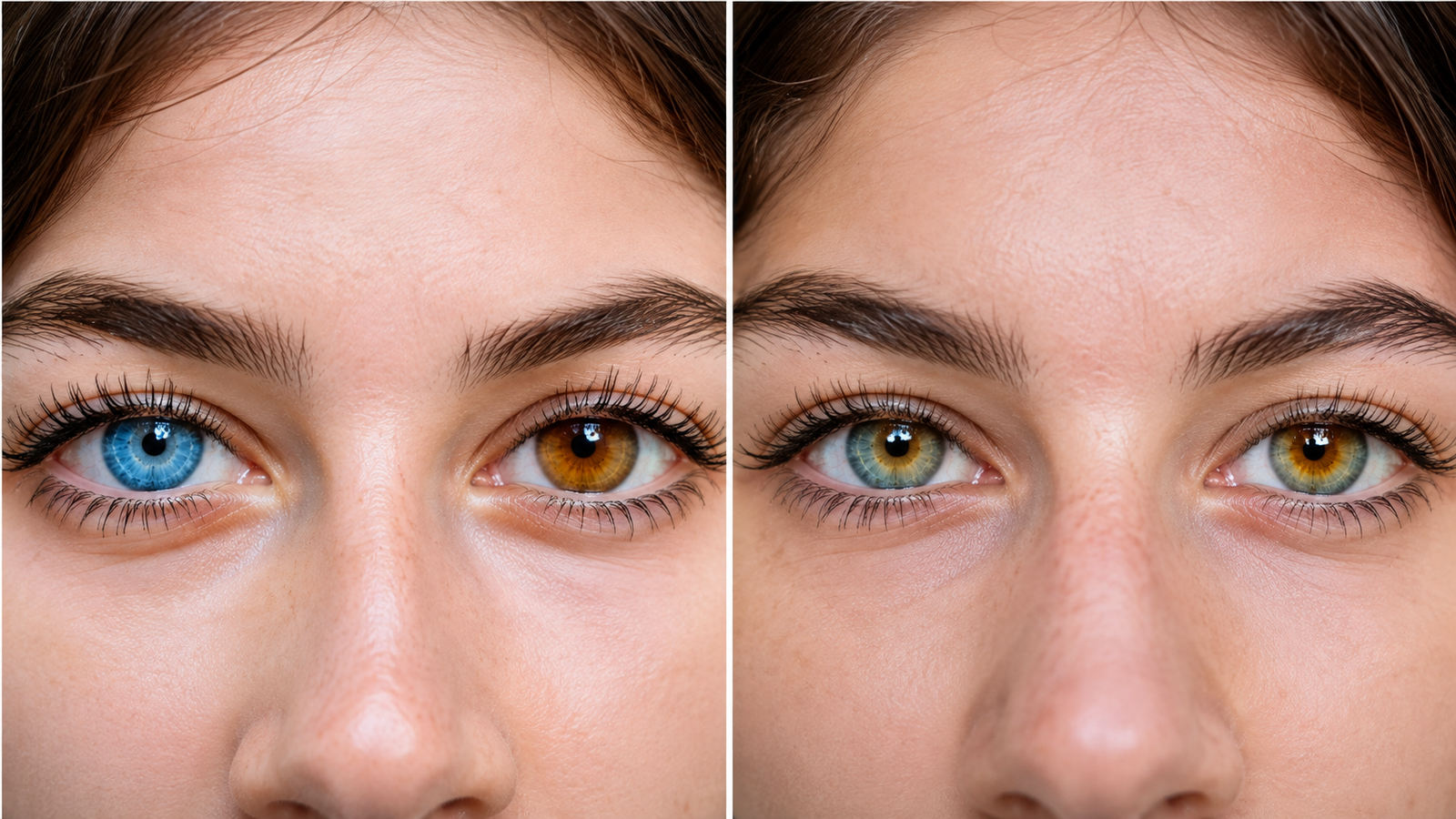
Complete heterochromia, also known as heterochromia iridum, occurs when each eye has a completely different colour.
For example, someone might have one blue eye and one brown eye. Another person might have one green eye and one hazel eye.
This is perhaps the most recognisable form because the colour difference between the two eyes is immediately noticeable.
Complete heterochromia can be inherited or develop because of certain medical conditions. When it has been present since birth and is not associated with other health problems, it is often harmless.
2. Sectoral Heterochromia
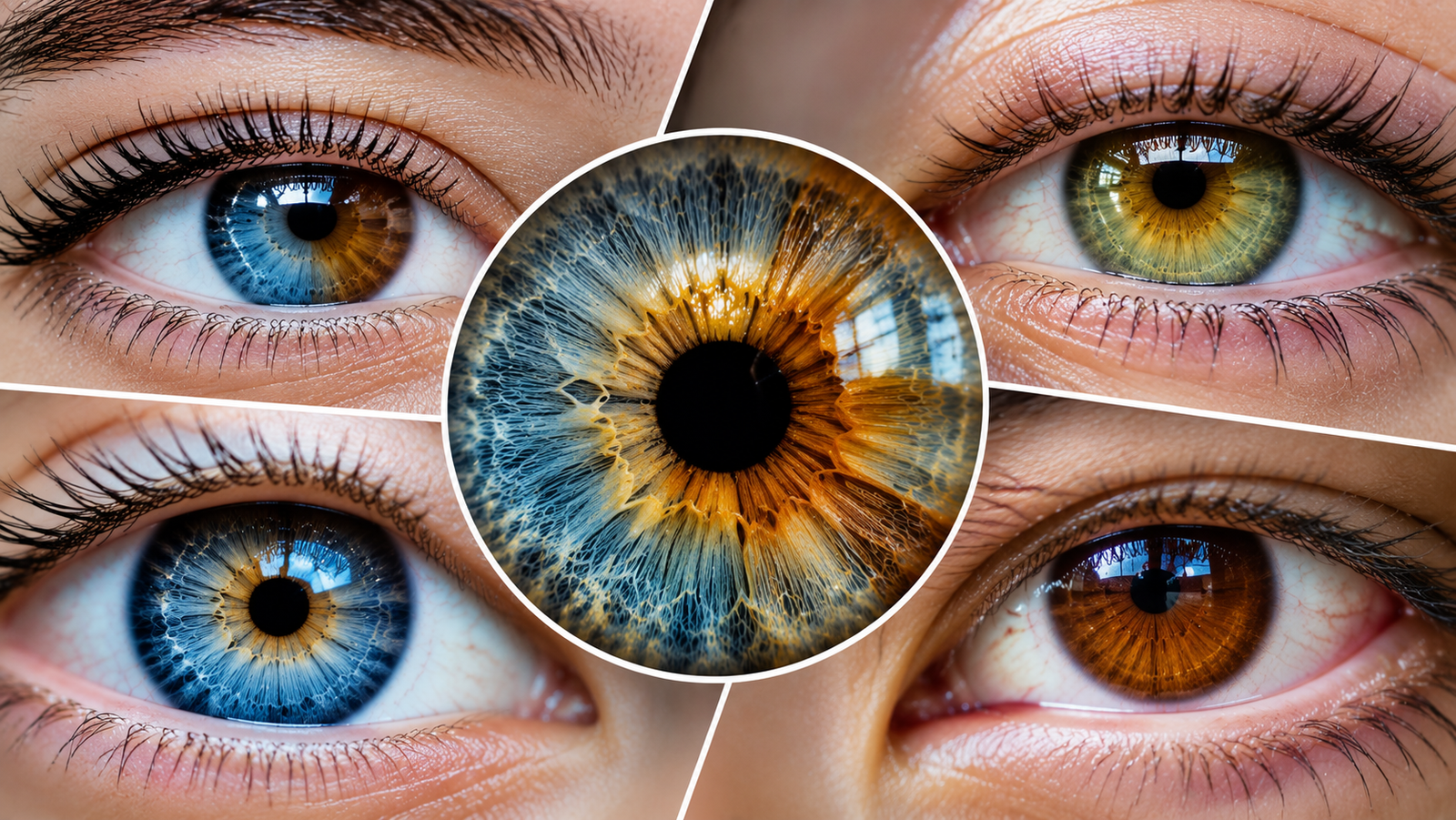
Sectoral heterochromia, also called partial heterochromia or heterochromia iridis, occurs when one section of an iris has a different colour from the remaining area.
For example, someone might have a predominantly blue iris with a brown section covering part of it.
Unlike complete heterochromia, the difference appears within one eye rather than between two eyes.
The contrasting section can look like a small patch, wedge or irregular area of colour. It may be visible in one or both eyes.
Sectoral heterochromia can be a natural variation, although changes that develop later should be examined by an eye specialist.
3. Central Heterochromia
Central heterochromia is a pattern in which the iris has two or more distinct colours arranged in rings.
Typically, the area immediately surrounding the pupil has a different colour from the outer part of the iris.
For example, someone might have green eyes with a golden or amber ring around the pupil.
This creates an interesting appearance because the colours blend together towards the outer edge of the iris.
Central heterochromia is often confused with ordinary mixed-colour eyes. However, its defining feature is the distinct difference between the inner and outer areas of the iris.
It is generally a natural variation when present from early life.
What Causes Heterochromia Eyes?
The colour of human eyes is influenced by several factors, particularly the amount and distribution of melanin in the iris.
Melanin is produced by specialised cells called melanocytes. Differences in pigmentation can create variations in eye colour.
There are several possible explanations for heterochromia.
1. Genetic Factors
Genetics play an important role in determining eye colour. Some people inherit genetic variations that affect how pigment is produced, transported or stored in the iris.
These variations can result in different colours between the two eyes or different shades within one iris.
In many cases, isolated genetic heterochromia does not cause any additional health problems.
2. Congenital Conditions
Some people are born with heterochromia or develop it shortly after birth.
Although many cases are harmless, differences in eye colour can occasionally be associated with congenital conditions, including:
-
Waardenburg syndrome.
-
Congenital Horner syndrome.
-
Sturge-Weber syndrome.
-
Neurofibromatosis type 1.
These conditions may involve other signs or symptoms, so an eye examination is important when heterochromia is noticed in an infant.
3. Eye Injuries
An injury to the eye can sometimes change its pigmentation.
Trauma may cause bleeding, inflammation or damage to structures within the eye. These changes can affect how the iris looks.
If one eye develops a different colour following an accident or injury, medical assessment is important.
4. Eye Diseases and Inflammation
Certain eye conditions can cause acquired heterochromia.
Examples include:
-
Uveitis: Inflammation affecting the uvea, which includes the iris.
-
Fuchs heterochromic iridocyclitis: An inflammatory eye condition associated with changes in iris pigmentation.
-
Glaucoma: Some forms of glaucoma and their treatments can be associated with changes in eye appearance.
The presence of a colour difference does not automatically mean someone has one of these conditions. A specialist needs to identify the actual cause.
5. Certain Eye Medications
Some medications used to treat glaucoma can affect iris pigmentation.
For example, prostaglandin analogue eye drops, including latanoprost, can increase brown pigmentation in the iris.
This is an important distinction because eye colour changes are not always inherited or present from birth. Some can develop as a result of medical treatment.
Congenital vs Acquired Heterochromia
One of the most useful ways to understand heterochromia is to distinguish between the two main ways it develops.
| Feature | Congenital Heterochromia | Acquired Heterochromia |
|---|---|---|
| Development | Present at birth or develops early | Appears later in life |
| Main causes | Genetic variations or congenital conditions | Injury, illness or medication |
| Appearance | Different colours from an early age | New changes in iris colour |
| Medical concerns | Often harmless, but underlying causes should be excluded | Requires assessment to identify the cause |
| Treatment | Usually unnecessary if harmless | Depends on the underlying cause |
The distinction matters because a person who has had differently coloured eyes since childhood may have an entirely different explanation from someone whose eye colour changes unexpectedly during adulthood.
The American Academy of Ophthalmology recommends an eye examination when heterochromia develops later in life or changes in appearance.
Is Heterochromia Rare?
Yes. Heterochromia is considered uncommon in humans, although the exact percentage of people who have it is not firmly established.
The Cleveland Clinic explains that healthcare providers do not know the precise prevalence of heterochromia.
It is also worth understanding that not every eye containing two colours has true heterochromia. Natural variations in iris pigmentation can create several shades, particularly around the pupil.
Heterochromia is also observed in animals. It is relatively familiar in certain dog breeds, cats and horses.
Does Heterochromia Affect Vision?
In most cases, harmless heterochromia does not affect eyesight.
The condition describes a difference in iris colour rather than automatically indicating a problem with the structures responsible for vision.
Someone with naturally different coloured eyes can have normal eyesight and healthy eyes.
However, when heterochromia develops because of an underlying condition, the associated disease may affect eye health.
For example, inflammation can cause additional complications, while certain forms of glaucoma can damage the optic nerve.
Therefore, it is important to understand the cause rather than assume that every case is harmless.
When Should You See an Eye Specialist?
Heterochromia does not always require treatment, but certain situations deserve professional attention.
Consider arranging an examination with an ophthalmologist or optometrist if:
-
One eye suddenly changes colour.
-
You notice a new difference between your irises.
-
Eye colour changes following an injury.
-
You experience eye pain, redness or inflammation.
-
A baby’s eyes appear noticeably different in colour.
-
A change in eye colour occurs alongside a drooping eyelid or an unusually small pupil.
A specialist can examine the iris, check eye pressure where appropriate and look for signs of an underlying condition.
If the change is sudden and accompanied by significant pain or vision loss, seek urgent medical assessment rather than waiting for a routine appointment.
MedlinePlus also recommends medical assessment for newly noticed eye-colour differences, particularly in infants.
Can Heterochromia Be Treated?
There is no specific treatment needed for harmless heterochromia because the colour difference itself is not necessarily a disease.
Treatment depends on what caused the condition.
For example:
-
Genetic heterochromia: Usually requires no treatment when it is isolated and harmless.
-
Inflammation: Treatment focuses on controlling the underlying inflammatory condition.
-
Eye injuries: Management depends on the type and severity of the injury.
-
Medication-related changes: An eye specialist can review the medication and recommend appropriate management.
Some people prefer to make their eyes appear the same colour for cosmetic reasons. Prescription coloured contact lenses may offer this option.
However, coloured contact lenses should be properly fitted and prescribed by an eye-care professional. Using decorative lenses without appropriate fitting can cause serious eye problems.
Fascinating Facts About Heterochromia Eyes
Heterochromia is interesting not only because of its appearance but also because of the biology behind iris pigmentation.
Here are some facts worth knowing.
1. Three recognised patterns: Complete, sectoral and central heterochromia describe the main ways differently coloured irises can appear.
2. It can be present from birth: Some people have different coloured eyes from infancy because of genetic variations.
3. It can develop later: Eye injuries, inflammation and certain medications can cause acquired changes in iris pigmentation.
4. Melanin influences eye colour: The amount and distribution of melanin play an important role in determining the appearance of the iris.
5. It does not always affect eyesight: People with isolated, harmless heterochromia can have normal vision.
6. It occurs in animals too: Heterochromia is also seen in cats, dogs and horses.
7. Central heterochromia creates a ring-like appearance: Its inner and outer iris colours are visibly different.
8. Medical examination matters: A new or unexplained colour change should not automatically be dismissed as a natural variation.
Conclusion
Heterochromia eyes are a distinctive natural feature that can create beautiful differences in human eye colour. Whether someone has one blue eye and one brown eye, a patch of contrasting colour or a golden ring around the pupil, the appearance depends on variations in iris pigmentation.
The three main types are complete, sectoral and central heterochromia. Many cases are harmless and present from birth, while others develop because of injuries, medical conditions or certain medications.
The most important consideration is whether the colour difference has always been present or has appeared recently. New or unexplained changes should be checked by an eye specialist to rule out underlying problems.
Understanding the causes and types of heterochromia helps people appreciate this unusual feature while recognising when professional medical advice is necessary.
(FAQs)
What are heterochromia eyes?
Heterochromia eyes are eyes in which the irises have different colours. This may involve two completely different coloured eyes or multiple shades within the same iris.
What are the three types of heterochromia?
The three main types are complete heterochromia, sectoral heterochromia and central heterochromia. They differ according to how contrasting colours appear in the irises.
Are heterochromia eyes genetic?
Heterochromia can be genetic. Some people inherit variations affecting iris pigmentation, although other cases are associated with congenital conditions, injuries or medications.
Is heterochromia dangerous?
Most isolated cases are harmless and do not affect eyesight. However, heterochromia can sometimes indicate an underlying eye condition, particularly when it develops unexpectedly.
Can your eyes develop heterochromia later in life?
Yes. Acquired heterochromia can develop following eye injuries, inflammation, certain diseases or the use of particular medications. New changes should be examined by an eye specialist.
Can heterochromia be corrected?
Harmless heterochromia generally does not require correction. People who want to change the appearance of their eyes can discuss properly prescribed coloured contact lenses with an eye-care professional.
For more interesting articles and updates, visit our website: dailynex.co.uk.






One Comment