
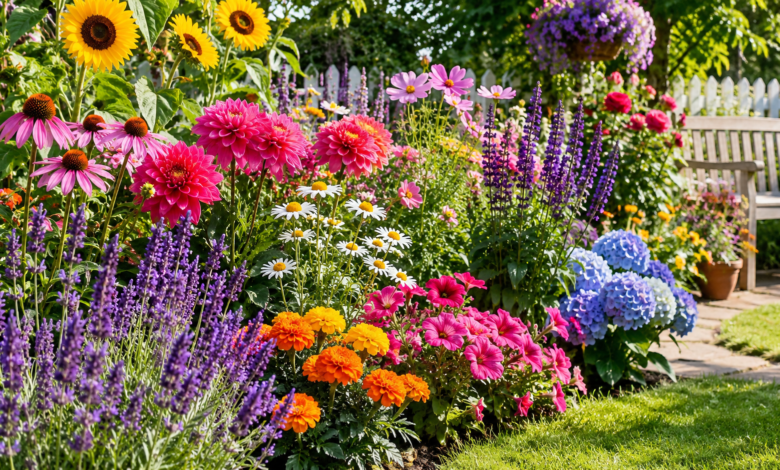
Summer is the perfect season to fill your garden with colourful flowers, attractive foliage and beautiful natural fragrances. From vibrant dahlias and cheerful sunflowers to delicate sweet peas and fragrant lavender, the right summer flowers can transform an ordinary outdoor space into a welcoming garden.
The best summer flowers depend on your climate, available sunlight, soil conditions and gardening experience. Some varieties are easy to grow from seed, while others return year after year as reliable perennials. Many also attract bees, butterflies and other beneficial pollinators.
Whether you have a large garden, a small backyard, a balcony or a collection of patio containers, these 15 summer flowers offer plenty of inspiration for creating a beautiful display in 2026.
1. Dahlias
Dahlias are among the most impressive summer flowers, producing large, colourful blooms in different shapes and sizes. Their flowers range from small pom-pom varieties to spectacular dinner-plate blooms.
They are available in shades of red, pink, purple, yellow, orange and white, making them suitable for almost any garden colour scheme.
Dahlias generally flower from summer until the first autumn frosts. They grow particularly well in sunny locations with fertile, moist but well-drained soil.
Growing tips:
- Choose a sunny, sheltered planting location.
- Plant tubers after the risk of frost has passed.
- Water regularly during dry weather.
- Remove faded flowers to encourage further blooms.
- Support taller varieties with suitable stakes.
Dahlias are particularly suitable for flower borders, cutting gardens and larger patio containers. However, their tubers need protection from freezing conditions in colder climates.
2. Zinnias
Zinnias are colourful annual flowers that bring a cheerful appearance to summer gardens. Their bright, daisy-like or double blooms come in red, orange, pink, purple, yellow and white.
They are especially useful for gardeners who want plenty of colour without investing in complicated planting arrangements.
Zinnias prefer warm temperatures, full sunlight and well-drained soil. They typically flower from summer into early autumn, with particularly impressive displays during warmer months.
Growing tips:
- Sow seeds indoors during spring or after suitable temperatures arrive.
- Plant outdoors after the danger of frost has passed.
- Leave sufficient space between plants for airflow.
- Water the soil rather than repeatedly wetting the leaves.
- Deadhead faded flowers to encourage new growth.
Zinnias also make excellent cut flowers and can be grown in garden beds, borders and containers.
3. Cosmos
Cosmos are elegant summer flowers recognised for their delicate foliage and open, daisy-like blooms. Their petals are commonly available in white, pink, magenta, orange and red.
They are relatively straightforward to grow from seed and can produce flowers over an extended period.
Cosmos prefer full sunlight and ordinary, well-drained garden soil. They generally perform poorly in deep shade or excessively wet conditions.
Growing tips:
- Sow seeds during spring.
- Choose a sunny planting position.
- Avoid excessive fertiliser, which can encourage foliage rather than flowers.
- Water during prolonged dry periods.
- Remove faded blooms to extend flowering.
Cosmos work particularly well in cottage gardens, informal borders and wildlife-friendly planting schemes.
4. Sunflowers
Sunflowers are classic summer flowers known for their tall stems and large, bright yellow flower heads. Although yellow is the traditional colour, certain varieties produce orange, red and bronze flowers.
Their impressive height makes them useful for creating visual interest at the back of garden borders.
Sunflowers are generally easy to grow from seed and are suitable for beginners. They prefer sunny locations and soil that retains enough moisture without becoming waterlogged.
Growing tips:
- Sow seeds directly into prepared soil after severe frost risk has passed.
- Choose a location receiving several hours of direct sunlight.
- Protect young seedlings from slugs and other garden pests.
- Support particularly tall varieties in exposed positions.
- Leave mature seed heads for birds where practical.
Dwarf sunflowers are also available for people with limited garden space or those growing flowers in large containers.
5. Sweet Peas
Sweet peas are popular climbing flowers appreciated for their delicate petals and pleasant fragrance. They are available in shades of pink, purple, white, blue and red.
Unlike many upright summer flowers, sweet peas grow as climbing or scrambling plants. They therefore need a suitable support structure, such as a trellis, netting or garden canes.
They generally prefer fertile soil, regular moisture and a position with plenty of sunlight.
Growing tips:
- Sow seeds in autumn or spring, depending on your climate.
- Provide a climbing support before plants become established.
- Water regularly during dry weather.
- Pick flowers frequently to encourage further flowering.
- Avoid allowing too many seed pods to develop.
Sweet peas are particularly attractive near garden entrances, fences and seating areas where their fragrance can be enjoyed.
6. Petunias
Petunias are versatile flowering plants widely used in summer bedding displays, hanging baskets and patio containers.
Their trumpet-shaped flowers come in a wide range of colours, including pink, purple, red, white and blue. Some varieties also feature attractive striped or patterned petals.
Petunias perform best in warm, sunny conditions and well-drained growing media.
Growing tips:
- Plant in containers with drainage holes.
- Use good-quality potting compost.
- Water regularly during hot weather.
- Feed container-grown plants according to product instructions.
- Remove faded flowers where necessary.
Trailing varieties are particularly effective in hanging baskets, while compact varieties work well in smaller pots and window boxes.
7. Marigolds
Marigolds are cheerful annual flowers known for their bright orange, yellow and golden blooms.
They are popular among beginner gardeners because they are relatively easy to grow and can provide colour throughout much of the summer.
French marigolds and African marigolds are two commonly cultivated groups, although their flower sizes and growth habits differ.
Marigolds generally prefer sunny locations and reasonably fertile, well-drained soil.
Growing tips:
- Sow seeds indoors or outdoors when temperatures are suitable.
- Choose a sunny planting location.
- Water during prolonged dry conditions.
- Remove faded flowers regularly.
- Protect young seedlings from slugs.
Their compact growth makes them suitable for flower beds, borders, vegetable garden edges and patio containers.
8. Lavender
Lavender is a fragrant flowering shrub that combines attractive purple flower spikes with aromatic grey-green foliage.
It is especially popular in Mediterranean-style gardens, herb borders and outdoor spaces designed to attract pollinating insects.
English lavender is generally a reliable choice for gardens in suitable climates. It prefers full sun and free-draining soil rather than damp, heavy ground.
Growing tips:
- Plant in a sunny location.
- Choose well-drained soil or a suitable container.
- Avoid excessive watering once established.
- Prune lightly after flowering to maintain its shape.
- Avoid cutting heavily into old woody stems.
Lavender is particularly useful for gardeners seeking flowers that offer fragrance and visual interest without demanding frequent watering once established.
9. Salvia
Salvia is a diverse group of flowering plants that can provide attractive colour throughout summer and early autumn.
Its flowers often grow in upright spikes and are available in shades of purple, blue, red, pink and white.
Many salvias are particularly valuable for pollinators, making them a useful addition to wildlife-friendly gardens.
Most popular garden varieties prefer a sunny position and well-drained soil.
Growing tips:
- Choose a variety suitable for your local climate.
- Plant in spring or early summer after frost risk has passed.
- Avoid waterlogged soil.
- Remove faded flower spikes where appropriate.
- Check whether your selected variety needs winter protection.
Salvias are suitable for borders, containers and mixed planting arrangements.
10. Echinacea (Coneflowers)
Echinacea, commonly called coneflower, is a popular perennial known for its distinctive daisy-like flowers and raised central cones.
The traditional varieties have pink or purple petals, although modern cultivars also offer white, red, orange and yellow colours.
These flowers are particularly useful for late-summer gardens because they provide colour when some earlier flowering plants begin to fade.
Echinacea prefers full sunlight and well-drained soil. Once established, many varieties can tolerate relatively dry conditions.
Growing tips:
- Plant in spring when soil conditions are suitable.
- Choose a sunny position.
- Avoid waterlogged planting areas.
- Allow plants enough room to form established clumps.
- Consider leaving some seed heads for garden wildlife.
Echinacea works particularly well in perennial borders and naturalistic planting schemes.
11. Rudbeckia (Black-Eyed Susans)
Rudbeckia is recognised for its bright daisy-like flowers, usually featuring golden-yellow petals surrounding a dark central cone.
Some varieties also produce orange, red and bronze flowers.
These plants are particularly attractive in late-summer and autumn borders, providing colour when many early-season flowers have finished blooming.
Rudbeckias generally prefer sunny positions and can grow in a range of garden soils.
Growing tips:
- Plant in a sunny or lightly exposed position.
- Keep young plants watered while establishing.
- Remove faded flowers if you want to encourage continued blooming.
- Give taller varieties suitable support when necessary.
- Leave selected seed heads standing for winter interest.
Rudbeckias are excellent choices for prairie-style gardens, mixed borders and wildlife-friendly spaces.
12. Verbena
Verbena is a versatile flowering plant available in different forms, from upright varieties to low-growing and trailing types.
Its clusters of small flowers commonly appear in purple, pink, red and white.
Some varieties, including Verbena bonariensis, are particularly popular for their tall, airy appearance. Trailing types are better suited to hanging baskets and containers.
Verbenas generally prefer warm conditions, full sunlight and well-drained soil.
Growing tips:
- Choose a warm, sunny planting position.
- Avoid waterlogged soil.
- Water regularly while plants become established.
- Remove faded flowers when appropriate.
- Check winter hardiness before choosing perennial varieties.
Verbena can provide colour from early summer towards the first frosts, depending on the variety and local climate.
13. Hardy Geraniums
Hardy geraniums are reliable flowering perennials that are useful for filling spaces in garden borders.
They produce attractive flowers in shades of pink, purple, blue and white, often accompanied by decorative foliage.
Unlike some summer flowers that require full sunlight, several hardy geranium varieties can also tolerate partial shade.
They are generally easy to grow and can be suitable for different garden styles.
Growing tips:
- Select a variety suited to your sunlight conditions.
- Plant in spring for establishment.
- Water during prolonged dry weather.
- Cut back after flowering if foliage becomes untidy.
- Divide established clumps when necessary.
Hardy geraniums are particularly useful for cottage gardens, mixed borders and planting beneath taller shrubs.
14. Roses
Roses remain among the most recognisable garden flowers, appreciated for their elegant petals, fragrance and variety of colours.
They are available as climbing roses, shrub roses, miniature varieties and traditional hybrid teas.
Some varieties produce a single major flowering period, while repeat-flowering roses can provide additional blooms throughout summer and into autumn.
Most roses perform best in sunny locations with fertile, well-drained soil.
Growing tips:
- Choose a variety appropriate for your available space.
- Plant in a position with good sunlight and airflow.
- Water at the base during dry periods.
- Remove faded flowers from repeat-flowering varieties.
- Prune according to the specific rose group.
Roses are suitable for traditional gardens, decorative borders, arches and large containers.
15. Nasturtiums
Nasturtiums are colourful annual flowers with rounded leaves and distinctive trumpet-shaped blooms.
Their flowers commonly appear in orange, yellow, red and cream shades. Some varieties grow in compact forms, while others trail or climb.
They are particularly useful for gardeners who want a relatively inexpensive plant that can be grown from seed.
Nasturtiums prefer sunlight and reasonably well-drained soil. They can tolerate less fertile conditions and may produce more foliage than flowers when given excessive fertiliser.
Growing tips:
- Sow seeds directly outdoors when temperatures are suitable.
- Choose a sunny or lightly shaded position.
- Water during extended dry weather.
- Provide support for climbing varieties.
- Allow selected flowers to develop seed pods if you want to collect seeds.
Nasturtiums are attractive in containers, raised beds and informal garden borders. Their flowers and leaves are also edible when correctly identified and grown without unsuitable chemical treatments.
How to Choose the Best Summer Flowers for Your Garden
Choosing summer flowers involves more than selecting attractive colours. Consider your available space, local climate, sunlight exposure and how much maintenance you can provide.
Here are some important factors to consider before buying seeds or plants.
1. Check Your Sunlight Conditions
Different flowers require different amounts of sunlight.
For example:
- Full sun: Sunflowers, lavender, zinnias and dahlias.
- Partial shade: Certain hardy geraniums and suitable varieties of other flowering plants.
- Containers: Petunias, dwarf dahlias and compact zinnias.
Check the plant label before purchasing because requirements can vary between cultivars.
2. Choose Between Annuals and Perennials
Annual flowers complete their life cycle in one growing season. They are useful for creating colourful displays and filling empty spaces.
Perennials return for multiple growing seasons when grown in suitable conditions.
For example, zinnias and cosmos are commonly grown as annuals, while echinacea and many hardy geraniums are perennials.
Combining both types can provide an attractive garden with seasonal variety.
3. Consider Your Available Space
Large gardens can accommodate tall sunflowers, dahlias and climbing sweet peas.
Smaller outdoor spaces may benefit from compact varieties, hanging baskets and patio containers.
Choosing plants according to their mature size helps prevent overcrowding.
4. Think About Watering Requirements
Some flowers need consistently moist growing conditions, while others become relatively drought-tolerant once established.
Lavender, for example, prefers free-draining soil and does not appreciate excessive moisture.
Container-grown plants generally require more frequent watering because their compost dries out more quickly.
Best Summer Flowers by Garden Type
| Garden type | Suitable flowers |
|---|---|
| Small gardens | Petunias, zinnias, nasturtiums |
| Large gardens | Sunflowers, dahlias, roses |
| Hanging baskets | Petunias, trailing verbena |
| Cottage gardens | Sweet peas, cosmos, roses |
| Wildlife gardens | Echinacea, lavender, salvia |
| Shaded borders | Suitable hardy geraniums |
| Cutting gardens | Zinnias, cosmos, dahlias |
How to Keep Summer Flowers Healthy and Blooming
Good planting conditions and regular maintenance help flowers produce stronger growth and more attractive displays.
Consider these practical gardening habits:
Water consistently: Check the moisture level of the soil, particularly during hot weather. Water deeply when necessary rather than relying on frequent light watering.
Deadhead regularly: Removing faded flowers can encourage additional blooms in many flowering varieties.
Improve soil conditions: Add suitable organic matter where necessary to improve soil structure and moisture retention.
Provide adequate spacing: Overcrowded plants compete for light, water and nutrients. Proper spacing also improves airflow.
Feed container plants appropriately: Flowers growing in containers may need additional nutrients. Follow the instructions for the selected fertiliser.
Monitor pests: Check leaves and stems for aphids, slugs, snails and other common garden pests. Choose suitable control methods according to the plant and problem.
When Should You Plant Summer Flowers?
Planting times depend on your geographical location, climate and the type of flower.
In the UK, many tender summer flowers are started indoors during spring and moved outdoors after the last frost. In colder parts of North America, similar precautions are important.
Gardeners in warmer regions of Australia may have different planting windows because the seasons are reversed compared with the Northern Hemisphere.
A practical approach is to check your local frost dates, soil temperature and the growing instructions supplied with each plant.
Avoid planting tender varieties outdoors simply because the calendar says summer has started. Unexpected cold conditions can damage young plants.
Conclusion
The best summer flowers can transform your outdoor space with colourful blooms, attractive foliage and natural fragrance. Dahlias, zinnias, cosmos, sunflowers and sweet peas are excellent choices for creating vibrant seasonal displays, while lavender, echinacea, salvia and hardy geraniums offer additional variety.
When choosing summer flowers, consider your local climate, available sunlight, soil conditions and maintenance requirements. Combining annuals with suitable perennials can also help maintain garden colour throughout the season.
With thoughtful plant selection and consistent care, you can create a beautiful summer garden in 2026, whether you have a spacious backyard, a small garden or a simple collection of patio containers.
(FAQs)
What are the best summer flowers to grow?
Some of the best summer flowers include dahlias, zinnias, cosmos, sunflowers, petunias, lavender and sweet peas. The best choice depends on your climate, available sunlight and garden space.
Which summer flowers are easiest to grow for beginners?
Sunflowers, cosmos, nasturtiums, marigolds and zinnias are popular beginner-friendly choices. Many can be grown from seed without complicated gardening equipment.
Which summer flowers bloom for the longest time?
Certain verbenas can flower from early summer until the first frosts. Dahlias, petunias and some salvias can also provide extended flowering when grown in suitable conditions.
What summer flowers attract bees and butterflies?
Lavender, echinacea, salvia, cosmos and single-flowered dahlias can attract pollinating insects. Choosing flowers with accessible nectar and pollen can make your garden more wildlife-friendly.
Can summer flowers grow in pots and containers?
Yes. Petunias, dwarf dahlias, zinnias, lavender and trailing verbena are suitable container choices. Use pots with drainage holes and provide appropriate watering.
When should I plant summer flowers?
Planting times depend on your location and the flower variety. In frost-prone regions, tender summer flowers should generally be planted outdoors after the risk of frost has passed. Always check local growing conditions.
For more interesting articles and updates, visit our website: dailynex.co.uk.






One Comment